What it does
MonkeyLearn no longer looks like an active self-serve SaaS in its old form. The main marketing surface has effectively moved into Medallia, while the product itself is better understood today as a legacy text analytics workflow for reviews, tickets, and open-ended feedback - classification, sentiment, extraction, dashboards, and integrations with tools like Sheets or Zendesk.
Access
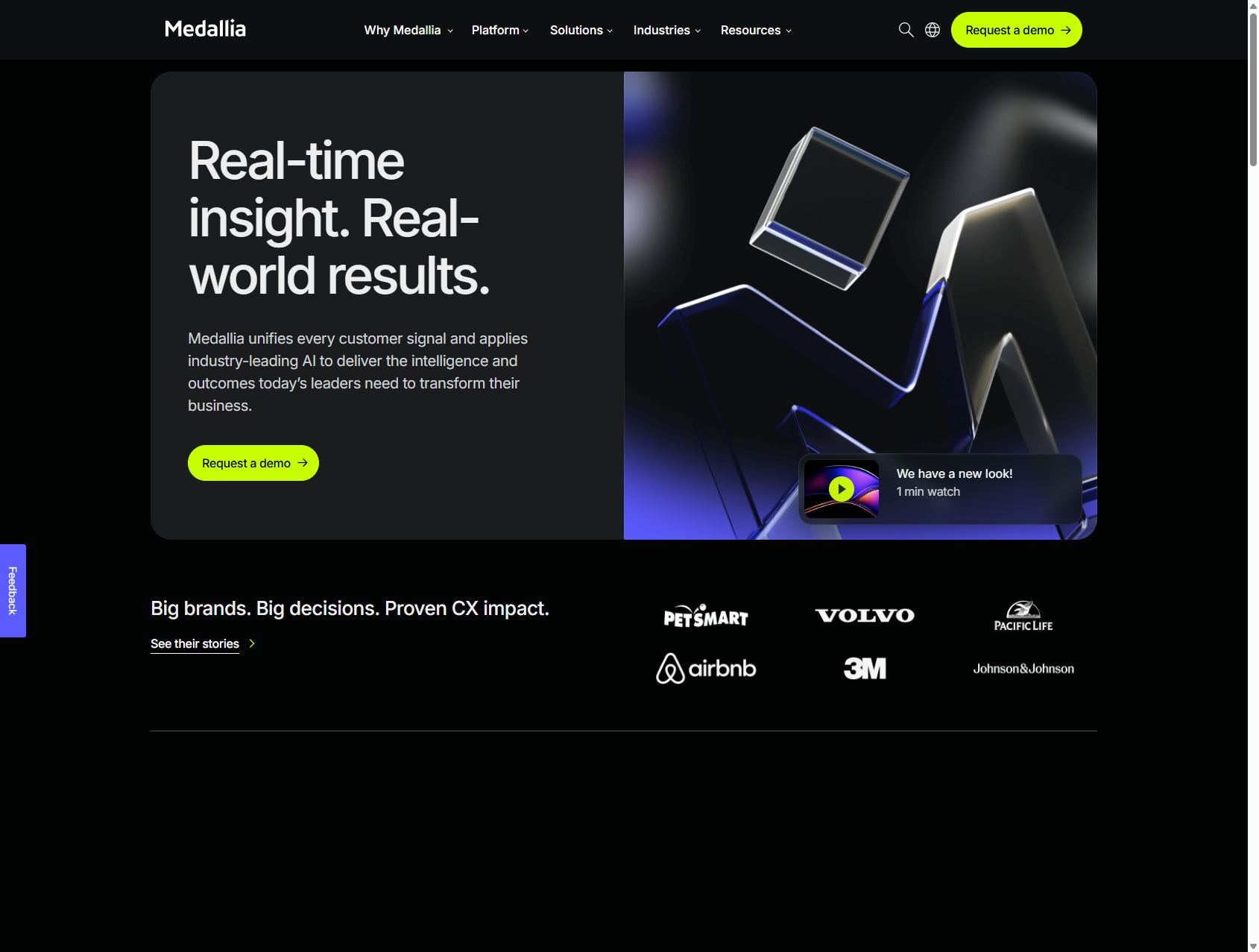
Public self-serve pricing is no longer visible. monkeylearn.com now redirects into Medallia, so access looks like a demo / enterprise flow rather than the old SaaS pricing model.
Screenshots
Usage examples
Analysis of reviews, NPS comments, and open-ended feedback
Legacy MonkeyLearn worked well when teams needed more than a simple sentiment label. It could break large volumes of feedback into topics, problems, and repeat patterns, then push that into a dashboard or spreadsheet workflow.
Auto-tagging and routing support tickets
One of the most practical workflows was classifying inbound tickets into buckets like bug, billing, or feature request so teams could route them faster to the right queue.
Batch text analysis through Google Sheets
For non-technical teams, MonkeyLearn was useful because it could live next to Google Sheets: collect comments, run them through models, and get workable labels without building an ML team around the task.
Application scenarios
Scenario: a support or CX team pulls feedback from multiple channels, then uses MonkeyLearn as a fast topic-tagging layer. That makes it easier to see where repeated pain points are piling up instead of reading everything by hand.
Scenario: a product team reviews App Store, NPS, and support comments to separate bugs from feature requests and general complaints. In that role, MonkeyLearn is useful as a text-systematizing workflow rather than as a trendy AI writer.